
Article by Gain Lim
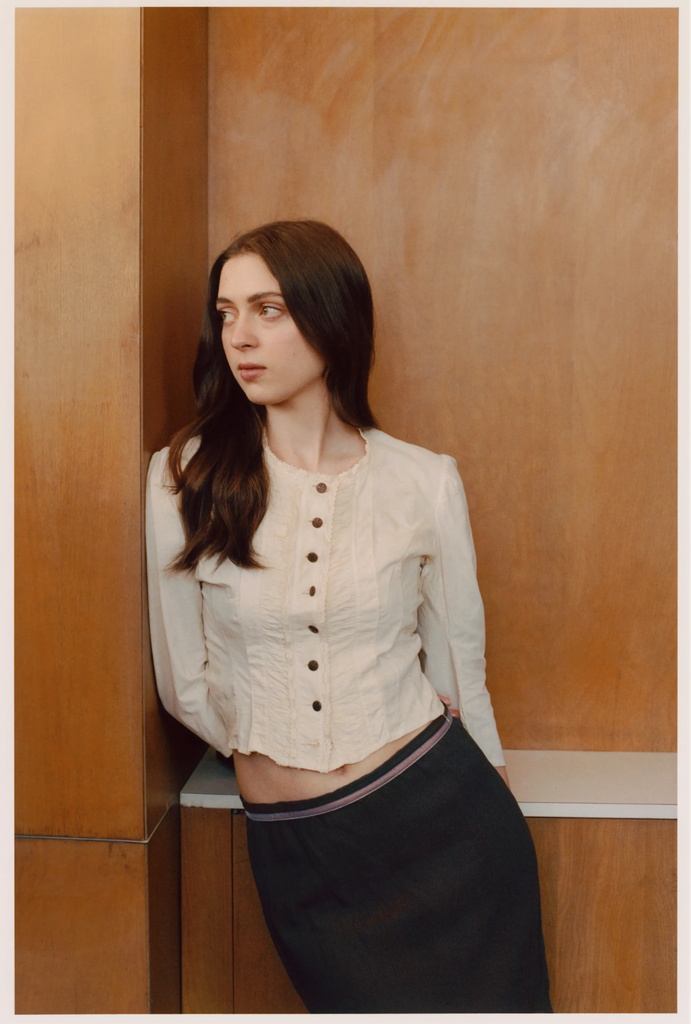
Photo by Keith Oshiro | Vogue
Lizzy McAlpine has never sounded more comfortable with uncertainty. The singer-songwriter broke into the mainstream with “ceilings,” the wistful standout from her 2022 album, five seconds flat, that later exploded on TikTok and became her first Billboard Hot 100 hit. But rather than chase its success, McAlpine has spent the years since stripping her music back. Her 2024 album Older traded much of the cinematic pop in her earlier work for the intimacy of a live band. Now, her fourth album, Angel, consists of buzzy guitars, tender pianos, and twangy harmonicas, where notes rub against one another instead of resolving cleanly.
In fact, nothing on Angel settles quite where you expect it to. Chords clash, melodies wander, and McAlpine repeatedly reaches for freedom only to find herself looking backward. Across 14 tracks, she considers longing, independence, and the traces people leave behind, resisting the idea that growing beyond the past requires abandoning it entirely.
Lead single “The light in the painting” begins in apparent certainty. McAlpine treats new romance with religious reverence, holy ground, sacred spaces, and heaven, while layered vocals and swelling instrumentation lend the song a cathedral-like spaciousness. But being “blinded” by someone’s light makes devotion perilously close to surrender.
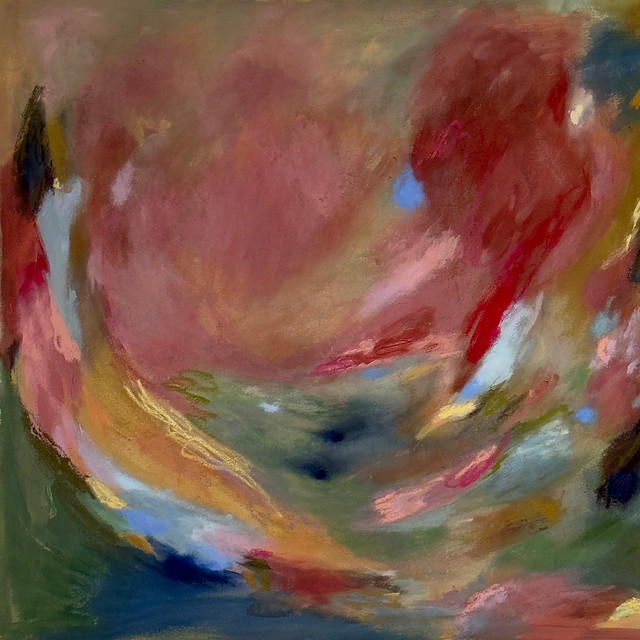
Lizzy McAlpine’s Angel on Spotify
As Angel unfolds, however, McAlpine begins looking for meaning outside of romantic attachment. Written while she was enjoying the stability of performing eight shows a week on Broadway, “Soldier of the Road,” featuring Fleet Foxes, turns the endless touring cycle into an exhausting search for relief; “The crowd” addresses her late father, tying artistic success to grief and the desire to make him proud; and “Mason’s song,” dedicated to close friend and collaborator Mason Stoops, finds growth in friendship. These different forms of connection ultimately lead to the title track, “Angel,” where the person McAlpine has been searching for begins to look increasingly like herself.
That searching quality is just as present in Angel‘s sound. Drawing from the loose, exploratory folk of Joni Mitchell’s Hejira and the hushed acoustic style of Nick Drake, McAlpine lets the arrangements breathe rather than pushing them toward conventional pop climaxes. Acoustic guitars creak, piano chords linger, strings swell gradually, and harmonicas cut through otherwise sparse spaces. Even silence feels deliberate. “I have a friend” opens with uneasy intervals and shifting octaves, while the seven-minute “Our strange ways” stretches and changes shape rather than settling into a predictable structure.
Angel never forces its contradictions into resolution. Its wandering structures and uneasy harmonies allow solitude to exist beside intimacy and grief beside gratitude. McAlpine spends much of the record looking backward, but by the end, remembering no longer prevents her from moving forward.