
Article by Sasha Leitner | Editorial Writer & Marketing Manager
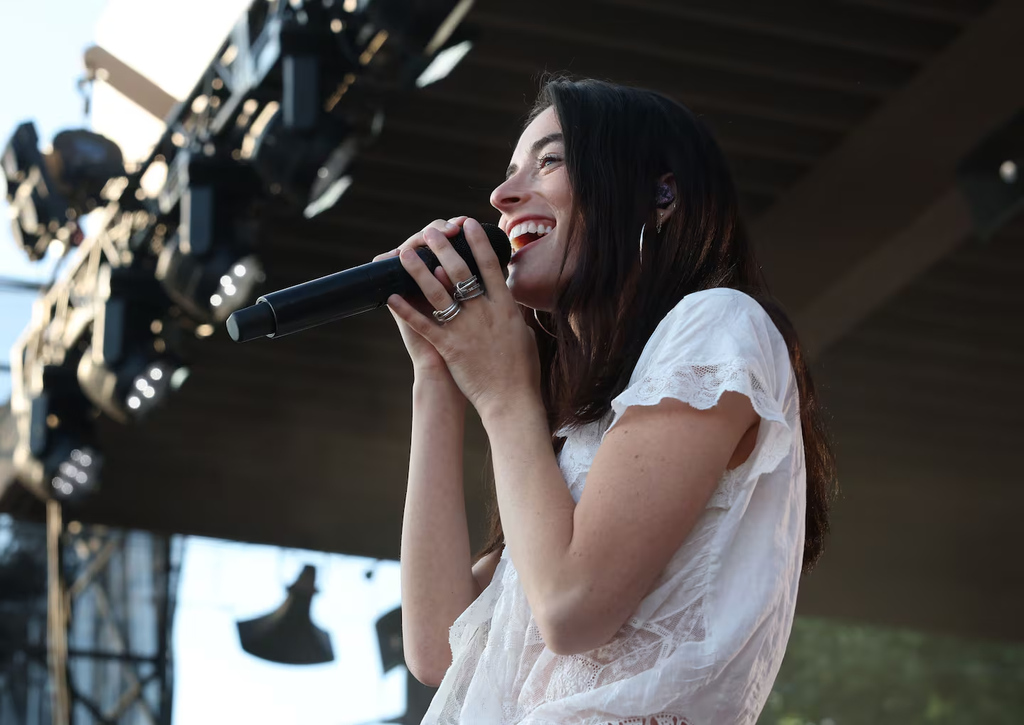
Stella Lefty came to the State Fair, and the internet is coming for her.
For most Syracuse University students, the New York State Fair is about commemorating the beginning of the school year through concession stands, face paint, nostalgic rides, and which concerts are worth attending for weekend entertainment. Yet this year, one performer brought something unexpected to Syracuse: an internet controversy that has followed her across the country.
As one of the country’s fastest-rising country-pop stars, Stella Lefty took the stage at the State Fair this past Sunday. However, for any music fan who has spent the summer scrolling social media, Lefty isn’t simply the singer behind the newest viral hit “Boston.” She is the latest target of pop culture’s ongoing debate surrounding “nepo baby” culture, facing backlash that has since surged into blatant antisemitism.
It is difficult to discuss Lefty’s multifaceted career without mentioning her family ties. Born Stella Lefkofsky, she is the daughter of billionaire and businessman Eric Lefkofsky, one of the Groupon co-founders. This fact has fueled assumptions that Lefty’s success revolved less around her talent and more around the doors her family’s upbringing and influence can open.

This criticism is not baseless; it is, however, being addressed with malintent.
Lefty’s controversy first began when listeners noticed that her latest hits sounded like existing songs. And while copyright infringement is not an uncommon situation within the pop genre, the argument rarely gets this heightened. Listeners first compared Lefty’s biggest hit, “Boston,” to Noah Kahan’s “Stick Season” and noticed Kahan has a songwriting credit on the latest hit. Lefty later confirmed that Kahan was given this credit after his team reached out, saying both songs have almost identical choruses. Additionally, other artists have sparked questions surrounding copyright discourse, such as music by the Chicks and Blake Shelton. Despite these commonalities, similar musical beats can be a PR nightmare, something Lefty and her team need to adapt to quickly amidst her widespread cancellation.
Lefty’s wealthy background has given her the industry connections that most artists do not have. Fans have their skepticism about her path to success, particularly through her social media rise, rather than through smaller-scale festivals and bars, typical of the country music scene. However, this doesn’t disregard the notion that despite nepo babies being given more accessible opportunities, they can still possess legitimate talent. The two are not mutually exclusive. While criticism of Lefty’s privilege is valid, some online commentary has crossed into attacks that condemn her Jewish background. This has turned a well-formed opinion about the exploitation of nepotism within the music industry into an overtly hateful argument. And while there is nothing inherently antisemitic about calling out nepotism, relying on stereotypes to question a songwriter’s worth and talent does not justify attacking an artist’s Jewish identity.
Within Syracuse’s dynamic college town, students come from various backgrounds, united under shared interests such as music, nightlife, and entertainment. So when Lefty walked onto the State Fair stage, Syracuse got an emerging artist and creative who has become the pinnacle of some of pop culture’s biggest debates, such as “How do we decide who determines success?” “How do we define originality?” and “When does criticism blur the line into hatred?”
Yes, Lefty is a “nepo” baby. Her connections and rapid industry rise are worthy of criticism. Yet holding her accountable for the advantages of her upbringing should never require holding Lefty’s Jewish identity against her.